
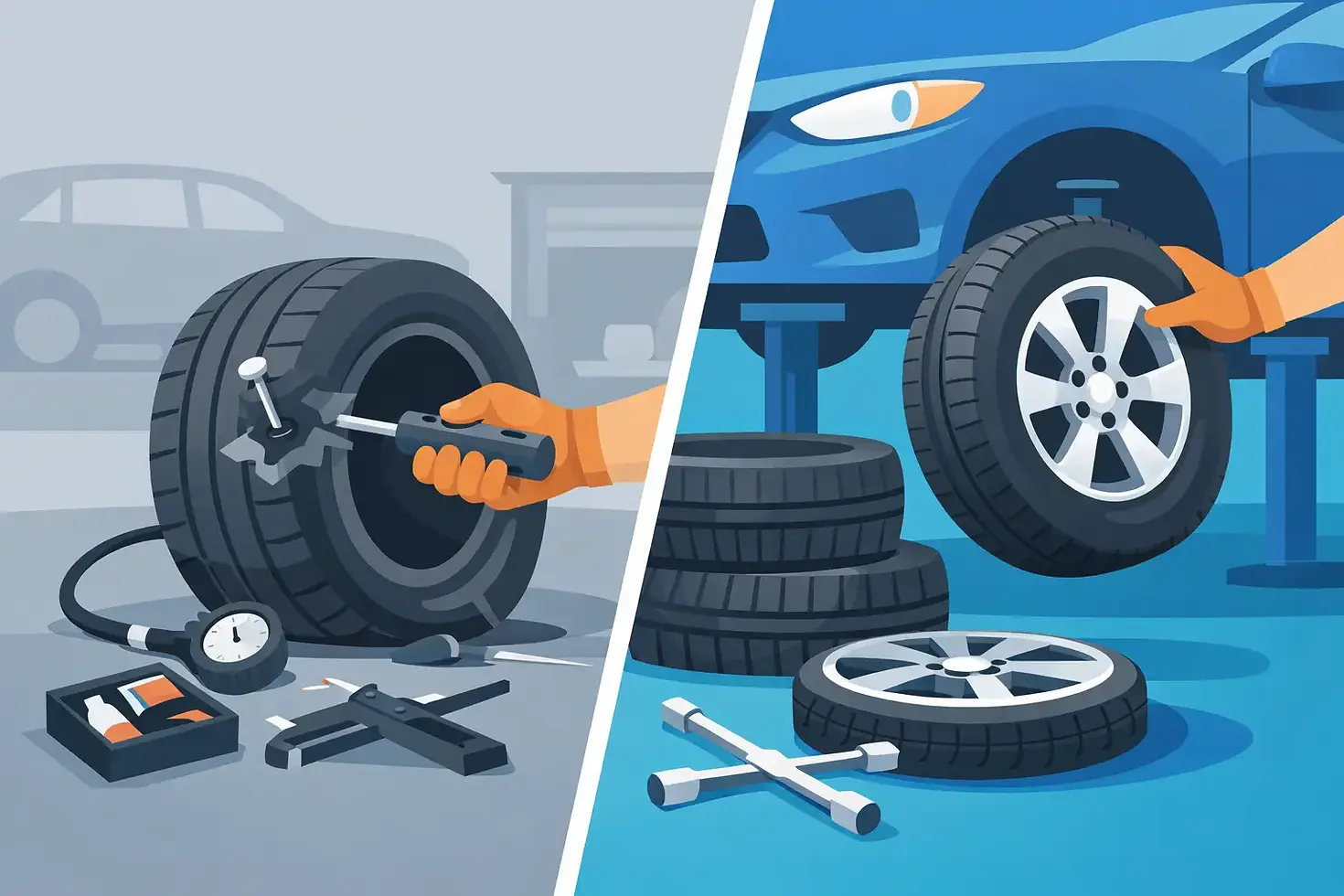
Tire Repair Versus Replacement: Which Is Safer?

A flat tire on I-635, a nail in the driveway, or a low-pressure warning before work creates the same immediate question: tire repair versus replacement? The fastest answer is not always the safest one. A small, repairable puncture can get you moving again without buying a tire. Sidewall damage, worn tread, or damage from driving while flat usually means replacement is the right call.
The goal is simple: get you back on the road without taking chances with the one part of your vehicle that grips the pavement. Here is how a professional decides what can be repaired and what needs to come off the vehicle.
Tire Repair Versus Replacement Starts With the Damage Location
Where the tire is damaged matters as much as what caused the damage. Most repairable punctures are in the center tread area, the thick portion of the tire designed to contact the road. A nail or screw through that area may be repairable if the hole is small and the tire has enough usable tread left.
Damage near the shoulder or sidewall is different. The sidewall flexes constantly as the tire rotates, and it cannot safely support a patch or plug. A cut, bubble, puncture, or crack in this area normally requires replacement. The same goes for a damaged bead, which is the edge of the tire that seals against the wheel.
If you are looking at the tire yourself, do not rely only on whether it still holds air. A tire can appear fine at rest but lose air under load or have internal damage that is not visible from the outside. That is why a proper inspection often requires removing the tire from the wheel.
When a Puncture Is Usually Repairable
A repair may be possible when the puncture is in the center tread, measures no more than about 1/4 inch, and has not caused internal damage. The tire also needs adequate tread depth and no signs that it was driven while severely underinflated.
The correct repair is more than pushing a temporary plug into the hole. A technician should inspect the inside of the tire, prepare the injury, and use a patch-plug repair that seals both the puncture path and the inner liner. This approach is much more dependable than a quick plug alone.
A repair is often the practical choice for a newer tire with one clean nail or screw puncture. It saves money, preserves a tire that still has plenty of service life, and can be completed without replacing a matched set.
When Replacement Is the Safer Call
Replacement is generally necessary when the puncture is outside the repairable tread area, the hole is too large, or there are multiple closely spaced punctures. A tire with exposed cords, a bulge, a separated tread, deep cracking, or a torn sidewall is not a repair candidate.
Driving on a flat tire can also turn a simple nail puncture into a replacement situation. When the tire runs low or flat, the sidewall gets pinched between the wheel and road. That can destroy the internal structure even if the outside looks mostly normal afterward. If you drove several miles on a flat, tell the technician. That detail affects the safety decision.
Age and tread wear matter, too. If the tread is close to the wear bars, paying for a repair may only delay a tire purchase by a few weeks or months. Replacing it can be the better value, especially before a long trip or during periods of heavy rain.
The Cost Question: Cheap Now or Reliable Later?
A repair usually costs less than replacement, but the cheapest immediate option is not automatically the best value. Repairing a puncture in a tire with strong tread and no internal damage makes sense. Repairing a worn tire or one with questionable damage can leave you paying again soon, possibly after another roadside stop.
Replacement costs vary based on tire size, vehicle type, load rating, and whether you need one tire or more. Passenger vehicles may only need one replacement tire, but all-wheel-drive vehicles can be more complicated. Significant differences in tread depth between tires can put added stress on the drivetrain. Some manufacturers recommend replacing tires in pairs or matching tread depth closely across all four tires.
Commercial vans, work trucks, and semi trucks have additional considerations. Load capacity, tire position, dual-wheel setups, and operating conditions all affect whether a repair meets safety requirements. A tire that might be acceptable for light-duty use may not be suitable for a vehicle carrying equipment, inventory, or freight.
Do Not Ignore the Cause of the Flat
A nail is easy to understand. A tire that keeps losing air without an obvious puncture needs a closer look. The leak may come from a valve stem, a damaged wheel, corrosion around the wheel bead, or a previous repair that has failed.
Potholes are a common culprit around North Texas. One hard impact can bend a wheel, create a bead leak, or damage the tire internally. Texas heat also puts extra pressure on aging tires, especially ones that are already underinflated. If a tire has repeated pressure loss, simply adding air is not a fix. Find the source before the problem leaves you stranded again.
A roadside technician can often identify whether the issue is a simple puncture, valve problem, wheel concern, or tire failure. If the tire can be safely repaired on site, that may get you moving quickly. If replacement is needed, the technician can help with the next safe step, including installing your spare when available.
What to Do When You Get a Flat
If the tire loses pressure while driving, slow down gradually and avoid sharp steering or hard braking. Pull into a safe, level location away from traffic when possible. Do not keep driving on the flat just to reach the next exit if a safe stopping point is available. That decision can ruin a tire that may otherwise have been repairable.
Once stopped, turn on your hazard lights and check your surroundings before getting out. If you see a nail or screw in the tread, leave it in place. Pulling it out can make the leak worse and will not tell you whether the tire is repairable.
Avoid using aerosol sealants unless there is no safer option. These products can make a proper repair more difficult, interfere with tire pressure sensors, and create a messy cleanup process. They are an emergency measure, not a real repair.
If you have a spare, make sure it is properly inflated before relying on it. Many drivers discover too late that their spare has been sitting flat in the trunk for years. Temporary spare tires also have speed and distance limits, so treat them as a way to reach a tire service location, not as a long-term replacement.
A Fast Inspection Can Prevent Another Breakdown
The right call in tire repair versus replacement depends on the actual condition of the tire, not a guess from the driver’s seat. A qualified inspection protects you from wasting money on an unnecessary tire, but it also prevents a risky repair on a tire that should be replaced.
For drivers in Dallas-Fort Worth, that matters when traffic is moving fast, temperatures are high, and you have somewhere to be. Rapido Roadside can dispatch mobile help for flat tires, tire changes, air delivery, and roadside tire concerns when you need an experienced set of eyes at your location.
If you are stuck with a flat, prioritize a safe stop, protect the tire from further damage, and get the condition checked before making the final call. A good repair can save the day. A necessary replacement can prevent the next emergency.


Comments